Behind the Scenes: How a Fashion Collection Is Created from Sketch to Runway
A finished runway look takes minutes to walk. The collection behind it takes months to build. What audiences see — the silhouettes, the movement, the story told through fabric and form — is the visible end of a process that begins long before a single stitch is sewn. This is what that process actually looks like.
Where Every Collection Begins — The Creative Concept
Every collection starts with a question, an obsession, or a feeling that refuses to leave. The collection narrative is the spine of everything that follows — without it, even technically accomplished garments feel like a random grouping of clothes rather than a cohesive body of work.
A creative director or lead designer typically spends weeks in this conceptual phase before touching a pencil. Research piles up: archival photographs, film references, botanical studies, architectural details, handwritten notes from a trip taken years ago. The goal is to locate a specific emotional territory that the collection will inhabit.
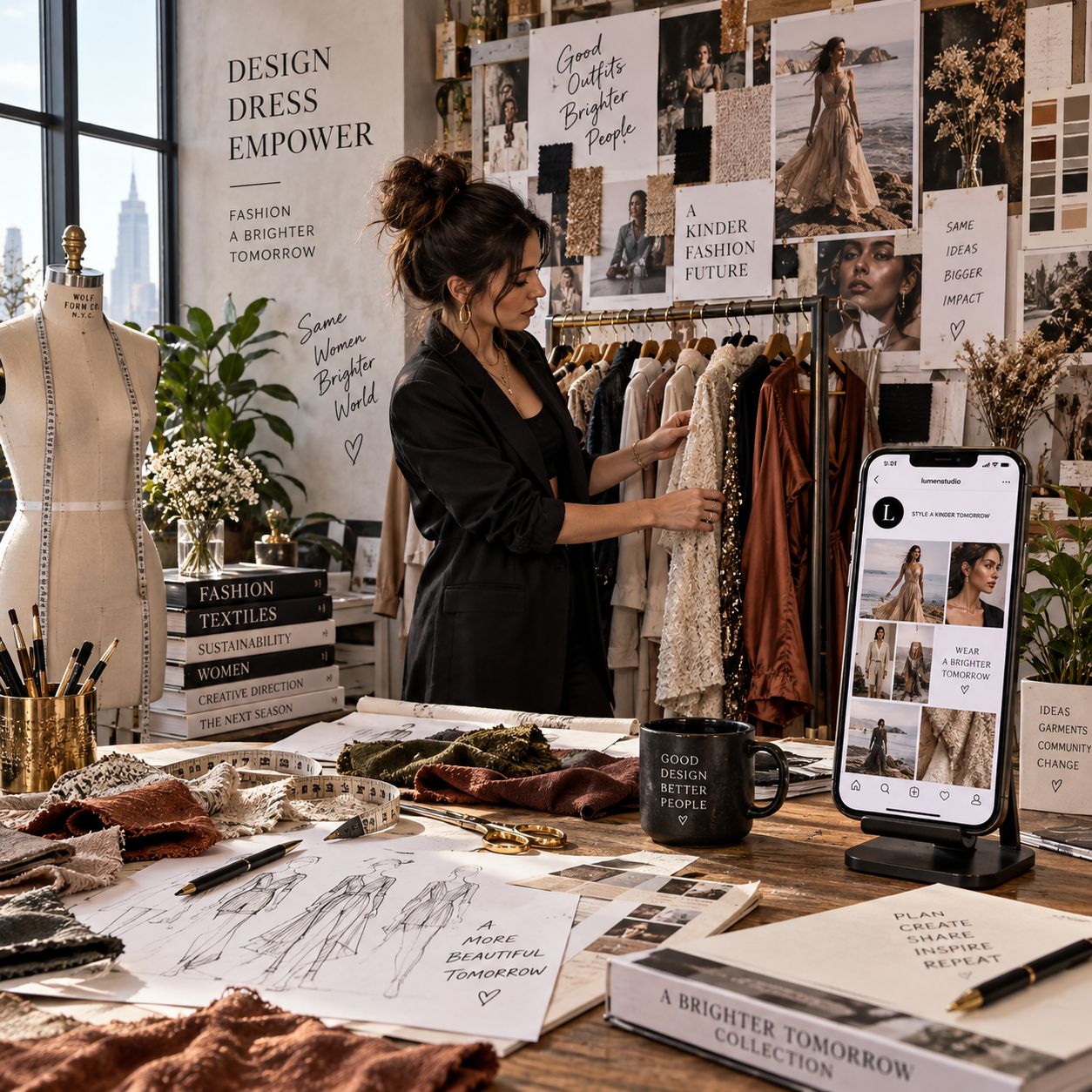
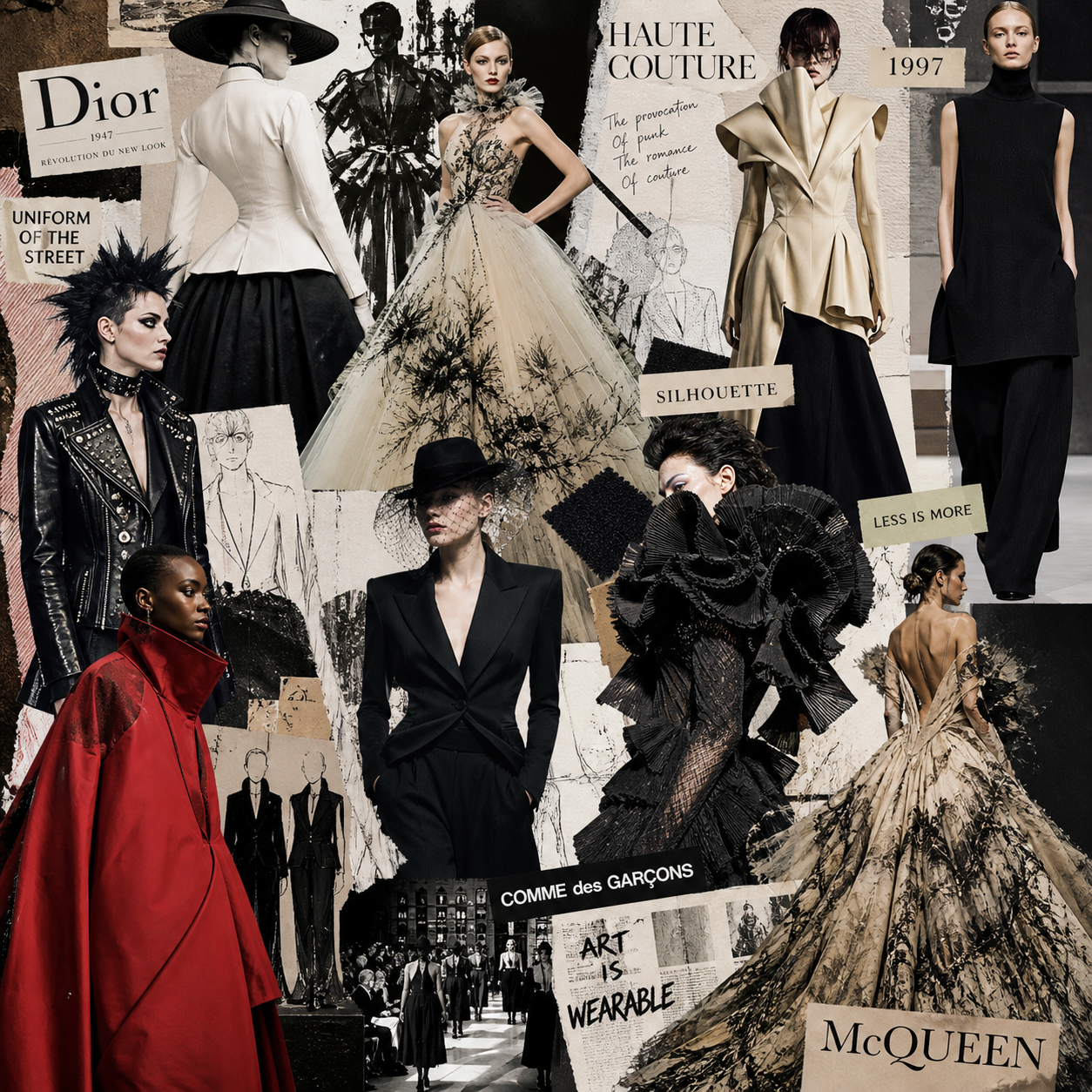
From this research, a mood board takes shape. It's less a decorative collage and more a visual thesis statement — a curated set of images, textures, and color relationships that define the collection's emotional register. Every subsequent decision, from silhouette to hem length to button choice, gets tested against it. Does this serve the concept? Does it belong here?
This stage is where the intellectual labor of fashion design is most concentrated. The physical work comes later. The thinking happens now.
From Inspiration to Paper — The Sketching Process
Fashion sketches are the first translation of an abstract concept into something wearable. They are not finished designs — they are a designer's way of thinking out loud.
Early sketches tend to be loose and gestural, prioritizing proportion, volume, and movement over precision. A designer might produce dozens of rough figures in a single session, chasing a silhouette that matches the mood board's energy. Some of those sketches go nowhere. A handful become the foundation of the collection.
Once key looks are identified, technical drawings — also called flats — are developed alongside them. Where fashion sketches communicate feeling, flats communicate construction. They show a garment laid flat, front and back, with accurate proportions, seam lines, pocket placements, and hardware details. These drawings become the instruction documents that the atelier and pattern makers work from.
The sketching phase is iterative by nature. A silhouette that reads beautifully on paper may behave differently in fabric. That discovery comes later — but the sketch is where the commitment begins.
Choosing the Right Fabrics and Materials
Fabric selection is one of the most consequential decisions in building a collection. The right material doesn't just complete a garment — it makes the garment possible. The wrong one can undermine even a strong design.
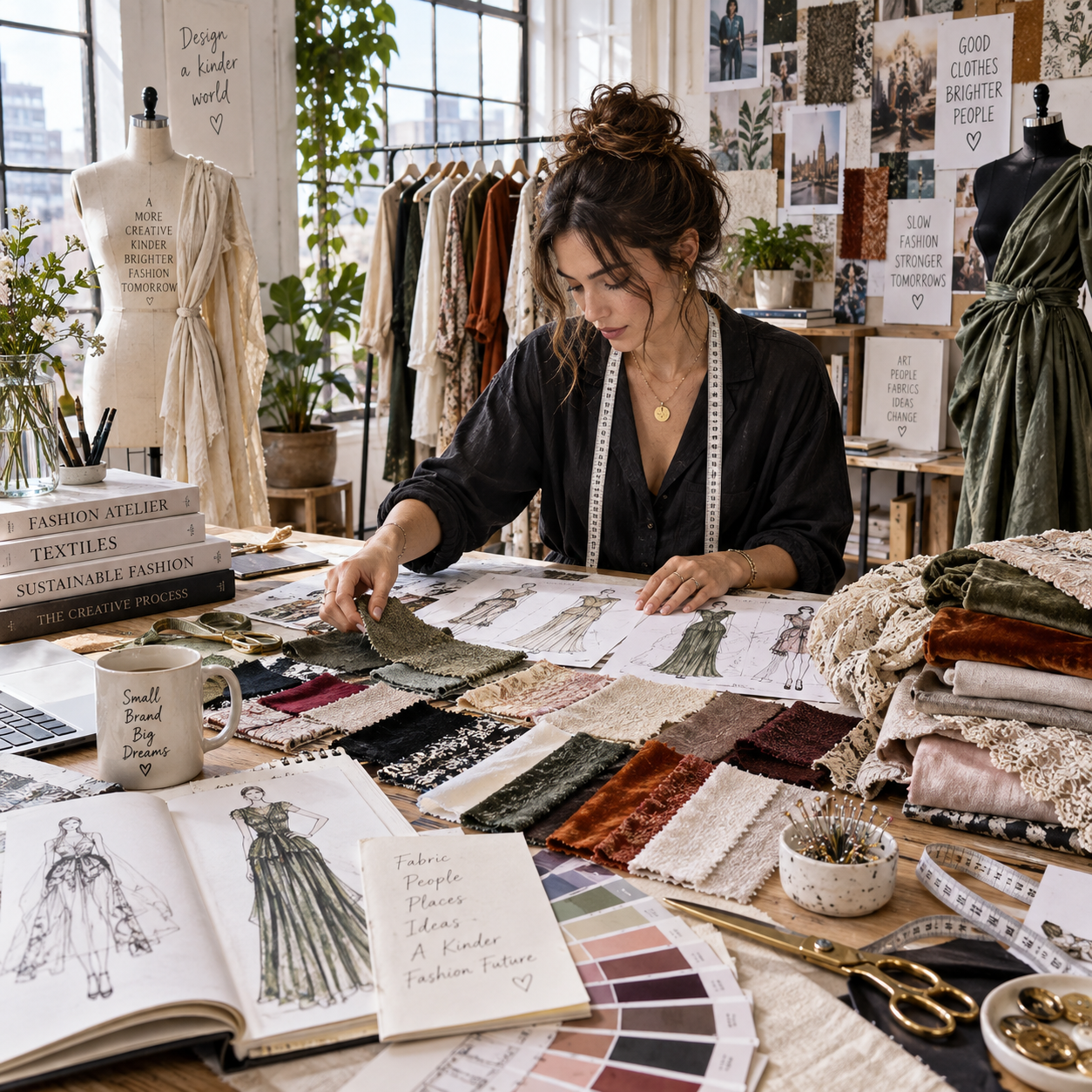
Fabric sourcing typically involves visiting trade shows, working directly with mills, and requesting sample lengths to test in the studio. Designers evaluate weight, drape, hand-feel, opacity, and how a material responds to cutting and sewing. A fabric that photographs beautifully may be structurally difficult to work with. A fabric that feels extraordinary in the hand may not hold the intended shape.
Color is equally deliberate. Most collections develop an internal palette — a set of tones that relate to each other and to the mood board. Fabric dyeing, overdyeing, and finishing treatments are sometimes commissioned specifically to achieve a color that doesn't exist off the shelf.
Material selection also carries practical weight. Budget constraints, lead times from suppliers, and minimum order quantities all shape what's actually achievable. Choosing a fabric means accepting those realities alongside its aesthetic qualities.
Building the Garment — Toiles, Patterns, and Draping
Before any final fabric is cut, every garment in the collection is built in prototype form. This is where ideas meet physical reality — and where many of them require adjustment.
A toile (sometimes called a muslin in American practice) is a test garment made from inexpensive calico or cotton fabric. It allows the design team to assess fit, proportion, and construction logic without risking costly materials. Seeing a sketch become a three-dimensional object for the first time is often where the real design work begins — because the body reveals things a flat drawing cannot.
Pattern making and draping are the two primary methods used to develop garment structures. Pattern making works from flat geometric pieces drafted to precise measurements. Draping works directly on a dress form, pinning and shaping fabric in real time to find the desired form. Many designers use both, depending on the garment's complexity and the effect they're after.
This stage is where a designer's technical knowledge becomes inseparable from their creative vision. Understanding how a dart controls volume, how a bias cut changes drape, or how a structured shoulder requires internal support — these decisions determine whether the final garment holds its intended form or collapses under its own weight.
The Atelier at Work — Construction and Craftsmanship
Once toiles are approved and patterns are finalized, the collection moves into the atelier — the sample room where skilled seamstresses and tailors cut and construct the actual garments. This is the production heart of the label.
Each look is built by hand, often by the same person from start to finish. Skilled atelier workers bring not just technical precision but interpretive judgment: knowing when a seam needs to be eased rather than forced, when a lining requires extra attention at the hem, when a hand-finished edge will read better than a machine-stitched one.
For complex pieces — heavily structured tailoring, embellished eveningwear, garments with intricate pleating or layering — construction time runs into days per look. The physical labor involved is significant, and it's one of the reasons designer fashion carries the price points it does. The atelier is not a factory. It is a workshop in the older sense of the word.
Embroidery, beading, and surface embellishment, if part of the collection, are typically handled by specialist artisans working in parallel. Coordinating these timelines — so that a hand-embroidered bodice arrives when the rest of the garment is ready for final assembly — is a logistical challenge that runs quietly beneath the creative one.
Fittings, Refinements, and Final Edits
Fittings are where a collection gets honest. A garment that looked resolved on the dress form may behave differently on a moving body — and the runway demands movement.
The fitting process is iterative and sometimes brutal. A sleeve is recut. A hem is raised. A collar that seemed architectural in the atelier reads stiff and awkward in motion. Some pieces are revised two or three times before they're approved. Occasionally, a look is cut from the collection entirely — not because it failed technically, but because it no longer serves the narrative as the collection has evolved.
This editing instinct is one of the marks of a strong creative director. A collection with twenty-five intentional, cohesive looks is more powerful than one with thirty-five that includes a handful of compromised pieces. The final edit is a creative act as much as a practical one.
Styling decisions are also made during this phase: which shoes, which accessories, how hair and makeup will reinforce or contrast the garment's character. Nothing is incidental at this stage. Every element is a choice.
Staging the Runway — From Backstage to the Final Walk
The runway show is the collection's public debut — a compressed, high-stakes performance that condenses months of work into roughly twelve minutes. Getting there requires its own layer of planning.
Casting shapes how the clothes are perceived. Models are selected not just for fit but for how they carry the collection's energy — the way they move, the quality of their presence. Run-of-show order is choreographed to build a narrative arc: opening looks establish the collection's world, closing looks deliver its emotional peak.
Set design, lighting, sound, and venue all serve the same conceptual brief as the garments themselves. A collection rooted in industrial architecture might be shown in a raw concrete space with a single overhead source. One built around softness and intimacy might use diffused light and close seating. The show environment is an extension of the mood board.
Backstage on show day is controlled chaos: final pressing, last-minute alterations, garments hung in run order, dressers assigned to specific looks. The designer moves through the space doing final checks — a button confirmed, a hem steamed, a look reconsidered and then committed to. And then the music starts.
What the audience sees is the collection. What the collection cost — in time, decision-making, craft, and revision — is the story behind it.
Frequently Asked Questions
How long does it typically take to create a fashion collection?
A full seasonal collection generally takes between four and six months from initial concept to runway. The timeline compresses significantly for capsule collections or resort presentations, sometimes running eight to twelve weeks. The longest phases are usually concept development and atelier construction — not, as many assume, the sketching.
What is the difference between a capsule collection and a full seasonal collection?
A capsule collection is a tightly edited group of pieces — typically eight to fifteen looks — built around a single focused concept. A full seasonal collection spans a broader range of silhouettes, occasions, and styling directions, often running twenty to forty looks. Capsule collections allow for faster development cycles and sharper conceptual focus; full collections demonstrate a label's range and depth.
What is a toile and why is it important in garment development?
A toile is a test garment made from inexpensive fabric, used to evaluate fit, proportion, and construction before cutting into final materials. It's important because no sketch — however detailed — fully predicts how a garment will behave on a body. The toile is where design assumptions are tested and corrected, saving both material cost and production time downstream.
How many pieces are usually included in a runway collection?
Most runway collections present between twenty and forty looks, though this varies by label scale and show format. Emerging designers often show tighter edits of fifteen to twenty-five looks. Established houses with broader commercial lines may show forty or more. The number matters less than the internal coherence — a focused collection of twenty strong looks consistently outperforms a sprawling one.
What happens to collection samples after a runway show?
Runway samples typically follow several paths. Some are photographed for lookbooks and editorial. Others are sent to wholesale buyers or used in press showrooms. A portion may be sold through sample sales. Archival pieces are sometimes retained by the label for reference and heritage purposes. In some cases, individual looks are acquired by collectors or costume institutions.