


Sustainable Fashion: Ethical Practices Every Modern Designer Should Embrace
Sustainability has moved from the margins of fashion discourse to the center of how serious designers build their labels. But for working designers, the challenge is rarely philosophical — it's practical. How do you actually integrate ethical principles into your sourcing, production, and brand communication without losing commercial viability or drowning in certifications you don't fully understand?
This guide cuts through the noise and offers process-oriented guidance for independent designers and small fashion labels ready to build something lasting.
What Sustainable Fashion Really Means for Designers Today
Sustainable fashion is a design and business framework that addresses environmental impact, social equity, and long-term resource viability across every stage of a garment's life. For working designers, this means making deliberate decisions at the material, production, and distribution levels — not just using the word "sustainable" in a bio.
The term gets stretched in every direction, which is part of the problem. Some brands use it to mean recycled packaging. Others mean zero-waste pattern cutting. A few mean genuinely restructured supply chains with verified fair labor standards. All three matter, but they operate at completely different scales of commitment.
For an independent designer, sustainability sits at the intersection of three dimensions: environmental (materials, carbon footprint, waste), social (worker conditions, wages, community impact), and economic (pricing models that make ethical production viable long-term). Ignoring any one of them creates gaps that can undermine the credibility of the other two.
The slow fashion movement frames this well: the goal isn't to produce less fashionable work, but to produce work that justifies its existence — in terms of quality, ethics, and longevity. That's a useful professional lens, not just an activist stance.
Choosing Materials That Align With Your Values
Material selection is the most immediate lever a designer controls, and it's where sustainable choices have the most visible impact. The right fabric choice depends on your design priorities, production volume, and supplier relationships — not just a ranking of which material sounds most ethical.
Deadstock fabric is one of the most practical entry points for independent designers. These are surplus textiles from larger manufacturers — often high quality, already produced, and diverting material from landfill. The limitation is unpredictable availability, which makes it harder to scale or repeat collections. It works best for limited runs and capsule collections where scarcity is a feature, not a problem.
Organic cotton and linen are grown without synthetic pesticides and have a lower water and chemical impact than conventional alternatives. Look for GOTS (Global Organic Textile Standard) certification when sourcing — it covers both the fiber and the processing chain, which matters because conventional dyeing can undo the gains from organic cultivation.
Recycled textiles — particularly recycled polyester from post-consumer plastic — have gained traction, but come with a trade-off worth acknowledging: they still shed microplastics during washing. Bluesign-certified recycled synthetics represent a more rigorous standard that addresses chemical use in processing.
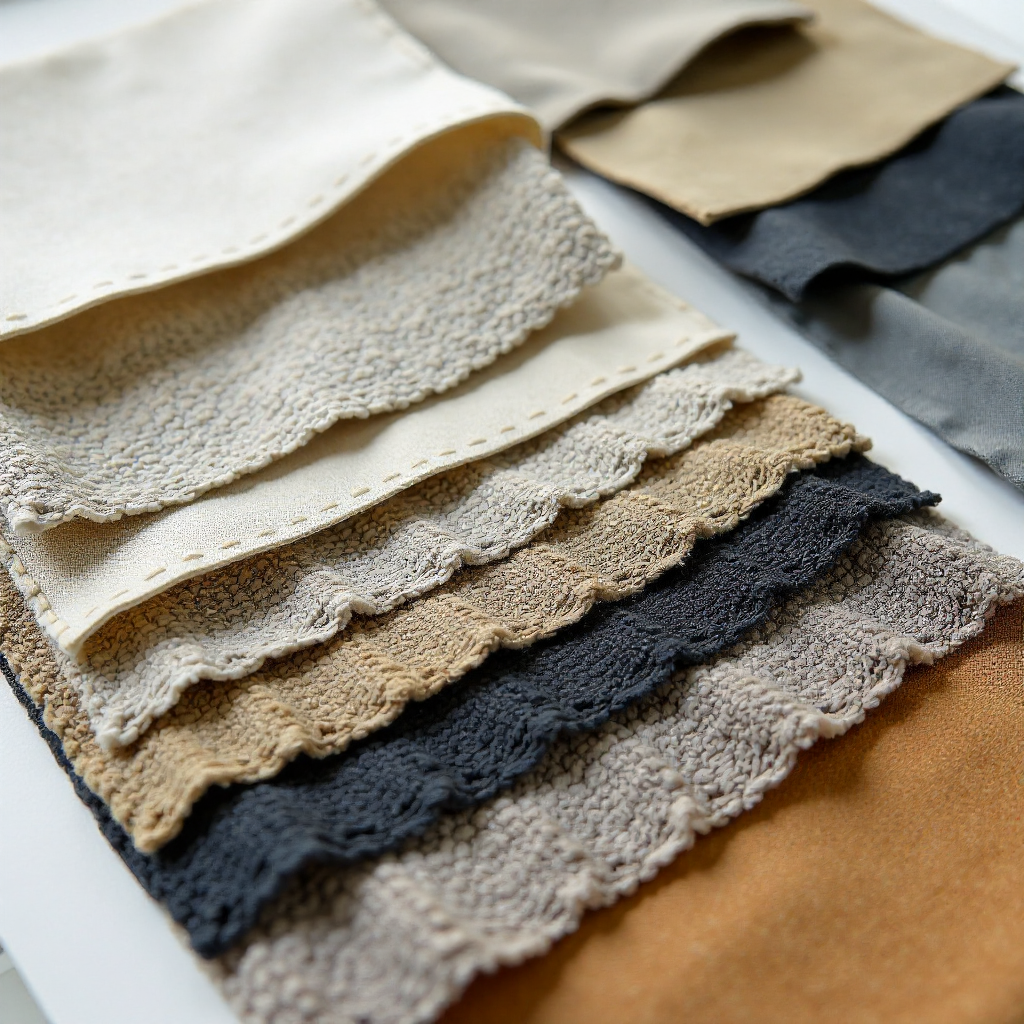
When evaluating any material, ask three questions: Where does the raw fiber come from? How is it processed? What happens to it at end of life? A fabric that scores well on origin but poorly on dyeing chemistry or compostability is only part of the picture.
Building an Ethical Supply Chain From the Ground Up
An ethical supply chain requires knowing who makes your garments, under what conditions, and at what wage — and being able to verify it. For independent designers, this usually means working with a smaller number of manufacturers and building direct relationships rather than relying on intermediaries who obscure the chain.
Start by auditing your current or prospective manufacturers against fair labor standards. Ask for documentation: Do they pay at or above living wage (not just minimum wage)? Are working hours compliant with local labor law? Is there a grievance mechanism for workers? Reputable manufacturers will have answers. Those who deflect or can't provide documentation are a red flag.
Certifications like Fair Trade, SA8000, or B Corp status offer independent verification, but they're not always accessible to smaller production facilities. In those cases, direct factory visits, third-party audits, or working through verified sourcing platforms can fill the gap. The ILO's Decent Work framework provides a useful baseline for what ethical labor conditions should look like.
Transparent production practices don't require publishing every contract — they require being able to answer questions honestly. Buyers and stockists increasingly ask. Knowing your supply chain well enough to speak to it confidently is both an ethical and commercial asset.
Designing With Longevity: The Case for Slow and Circular Fashion
Circular fashion design means creating garments that can be repaired, repurposed, or returned to the material cycle at end of life — rather than ending up in landfill after a season or two. It's a design philosophy, not just a material choice.
In practice, this shifts how you think about construction. Reinforced seams, replaceable buttons, and modular elements extend a garment's functional life. Avoiding mixed-fiber blends (which are nearly impossible to recycle) makes end-of-life processing viable. Designing for alterability — pieces that can be taken in, let out, or restyled — adds years to a garment's relevance.
The slow fashion movement reinforces this by questioning the pace of production itself. A designer releasing two or three considered collections per year, each built to last, operates very differently from one chasing trend cycles. Capsule collections fit naturally into this model: a tightly edited range of versatile, high-quality pieces that work together and wear well over time. They're also easier to produce ethically at small scale, since limited volume gives you more control over the supply chain.
Durability and desirability aren't opposites. The most enduring fashion labels — at every price point — have built reputations on pieces people keep, not pieces people replace.
Communicating Your Sustainability Story to Clients and Buyers
Authentic brand storytelling around sustainability means being specific, honest, and grounded in what you actually do — not what sounds best in a press release. Vague claims like "eco-friendly" or "conscious design" without supporting detail are the hallmark of greenwashing, and informed buyers and stockists can spot them quickly.
In your portfolio or lookbook, show the decisions behind the work. Name the fabric, its origin, and why you chose it. Describe your production relationship. If you're still transitioning — if your current collection uses 60% sustainable materials and you're working toward 90% — say that. Progress communicated honestly is more credible than perfection claimed without evidence.
For a conscious consumer audience, specificity builds trust. "Made from GOTS-certified organic linen, sewn in a family-run workshop in Portugal" tells a real story. "Sustainably made" tells nothing. The same principle applies to your pitch to buyers: they want to know what they're stocking and how to talk about it to their customers.
Brand storytelling in this context is a professional tool. It positions your label within a values framework that differentiates you from competitors who are still operating without one.
Practical Steps to Reduce Your Label's Carbon Footprint
Reducing your label's carbon footprint starts with understanding where emissions actually come from in your production process — and the biggest variables are usually transportation, material production, and energy use in manufacturing.
- Source locally where possible. Keeping material sourcing and production within the same region dramatically cuts transport emissions. It also makes supplier relationships easier to manage and audit.
- Produce in small batches. Overproduction is one of fashion's largest waste problems. Small-batch production reduces unsold inventory, which means less material wasted and less discounting pressure.
- Rethink packaging. Recycled, recyclable, or compostable packaging is a low-barrier change with visible impact. Avoid plastic poly bags where alternatives exist.
- Consolidate shipping. Grouping orders and avoiding air freight for non-urgent deliveries reduces logistics emissions meaningfully over a full season.
- Choose manufacturers using renewable energy. Ask about energy sourcing during supplier vetting — it's an underused question that signals seriousness and often surfaces useful information.
None of these steps require a complete operational overhaul. Most independent designers can implement two or three within a single production cycle. The cumulative effect on both emissions and cost efficiency is real.
Growing a Brand Identity Around Ethical Fashion Principles
Sustainability can be a genuine competitive differentiator for an independent label — but only if it's embedded in the brand identity rather than bolted on as a marketing layer. The designers who build lasting reputations in this space treat ethical principles as design constraints that sharpen their work, not restrictions that limit it.
A label built around a clear values framework attracts aligned stockists, press, and clients without having to compete on volume or price against fast fashion. That's a structural advantage for small producers who can't win on scale but can win on story, craft, and integrity.
Building that identity takes consistency. Your material choices, production relationships, communication, and pricing should all tell the same story. When they do, sustainability stops being a claim and starts being a reputation — and reputations compound over time in ways that marketing spend alone cannot replicate.
Frequently Asked Questions
How do I start transitioning my existing label to more sustainable practices?
Start with your next collection, not a full rebrand. Audit your current materials and identify one or two swaps — deadstock or organic alternatives — that fit your existing supplier relationships. Document the change and communicate it. Transition is a process, and incremental progress made transparently is more credible than a sudden wholesale pivot.
What certifications should sustainable fashion designers look for in suppliers?
GOTS (Global Organic Textile Standard) for organic fiber processing, OEKO-TEX Standard 100 for chemical safety in textiles, Bluesign for responsible manufacturing of synthetics, and Fair Trade or SA8000 for labor standards. Not every supplier will hold all of these — prioritize based on your material categories and production type.
Is sustainable fashion more expensive to produce, and how do I price accordingly?
Often yes, particularly for certified materials and ethical manufacturing. The pricing response is to build cost-per-wear and longevity into your value proposition. Buyers who understand what they're paying for — and why — are more likely to pay it. Transparent pricing breakdowns, increasingly common in the industry, help communicate this directly.
How can I avoid being accused of greenwashing?
Be specific and verifiable. Name materials, certifications, and production partners. Avoid superlatives you can't substantiate. Acknowledge where your label is still working toward higher standards. The FTC Green Guides offer useful benchmarks for what constitutes a substantiated environmental claim.
Can small or independent designers realistically compete on sustainability?
Small scale is actually an advantage here. Independent designers have direct supplier relationships, can make fast decisions, and can tell authentic stories that larger brands struggle to replicate. The constraint is usually knowledge and time, not structural inability. Starting with one clear sustainable principle and executing it well is more effective than attempting a comprehensive overhaul at once.