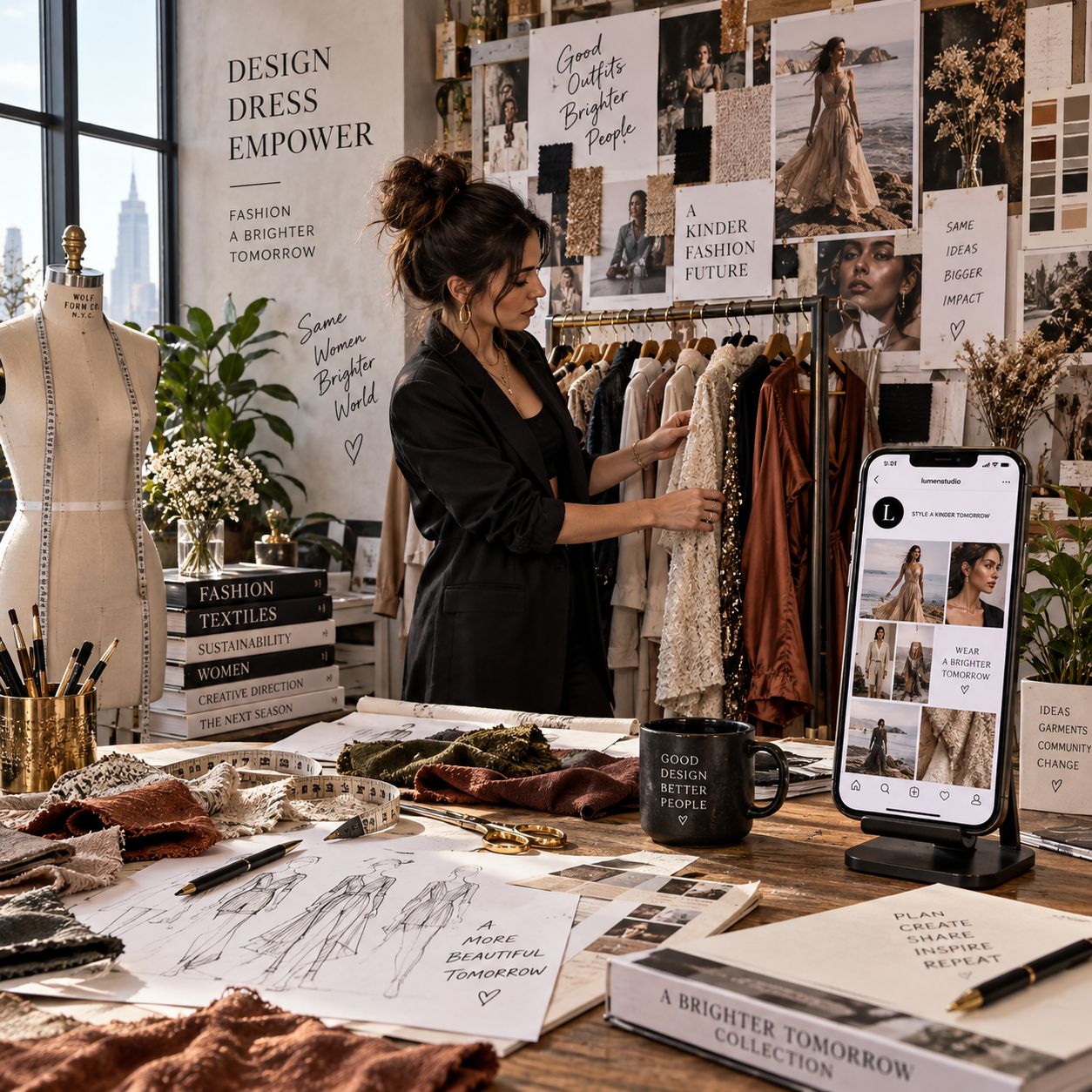
How to Build a Designer Portfolio That Stands Out (and Actually Opens Doors)
A fashion portfolio is not a resume with pictures attached. It is the primary argument for why someone should work with you, stock your label, or cover your collection. The difference between a portfolio that opens doors and one that gets politely ignored usually has nothing to do with talent — it comes down to intention, curation, and how clearly your designer identity comes through.
Whether you are an emerging designer building your first lookbook or an established label refreshing your presentation for buyers and press, the principles are the same. Every choice in your portfolio should be deliberate, and every page should feel unmistakably you.
Know Your Audience Before You Build Anything
The single most important decision in building a fashion portfolio is knowing exactly who it is for. A portfolio pitched at wholesale buyers looks fundamentally different from one designed to attract editorial stylists or potential collaborators.
Buyers want to see commercial viability — clean product photography, pricing context, range within a collection, and evidence that the label has a consistent aesthetic season to season. Press and stylists are drawn to narrative and visual impact: strong editorial photography, a clear point of view, and collections that photograph with personality. Collaborators — other designers, artists, or brands — are looking for creative alignment and proof that working with you produces something neither party could achieve alone.
Before you choose a single image or write a single word of copy, write down two or three sentences describing the person you most want to open your portfolio. What are they looking for? What would make them stop scrolling? That answer shapes every decision that follows.
Curate, Don't Accumulate — Choosing the Right Work to Show
A strong fashion portfolio contains fewer pieces than you think it should. The instinct to include everything — every collection, every garment, every experiment — works against you. Buyers and editors rarely spend more than a few minutes with a portfolio on first contact, and a crowded presentation signals indecision more than range.
The practical rule: show only work that reflects where your label is now, not where it has been. If your aesthetic has evolved significantly since your student collections or early seasons, those earlier pieces are likely doing more harm than good. Ruthless editing is not about hiding your history — it is about presenting a coherent creative direction.
A useful test for each piece you are considering: does this image or project reinforce the story you want to tell about your label, or does it create noise? If it creates noise, cut it. Aim for six to twelve strong projects rather than twenty average ones. Quality of curation is itself a signal of professional judgment — something every buyer and collaborator is assessing.
Tell a Story Through Your Collections
Presenting work as cohesive narratives — rather than isolated garment images — is what separates a compelling fashion portfolio from a product catalogue. Collections should feel like chapters, each with its own visual world and internal logic.
The lookbook format is the most direct way to achieve this. A well-produced lookbook gives a collection context: location, styling, casting, and photography all work together to communicate the feeling the garments are designed to create. Even a low-budget lookbook shot in a single location with a clear creative direction will outperform expensive product shots that lack atmosphere.
Capsule collections are particularly effective in portfolio presentations because their contained nature — typically six to twelve pieces built around a single concept — makes the design logic legible. A viewer can see exactly how you think, how pieces relate to each other, and how a concept translates into wearable garments.
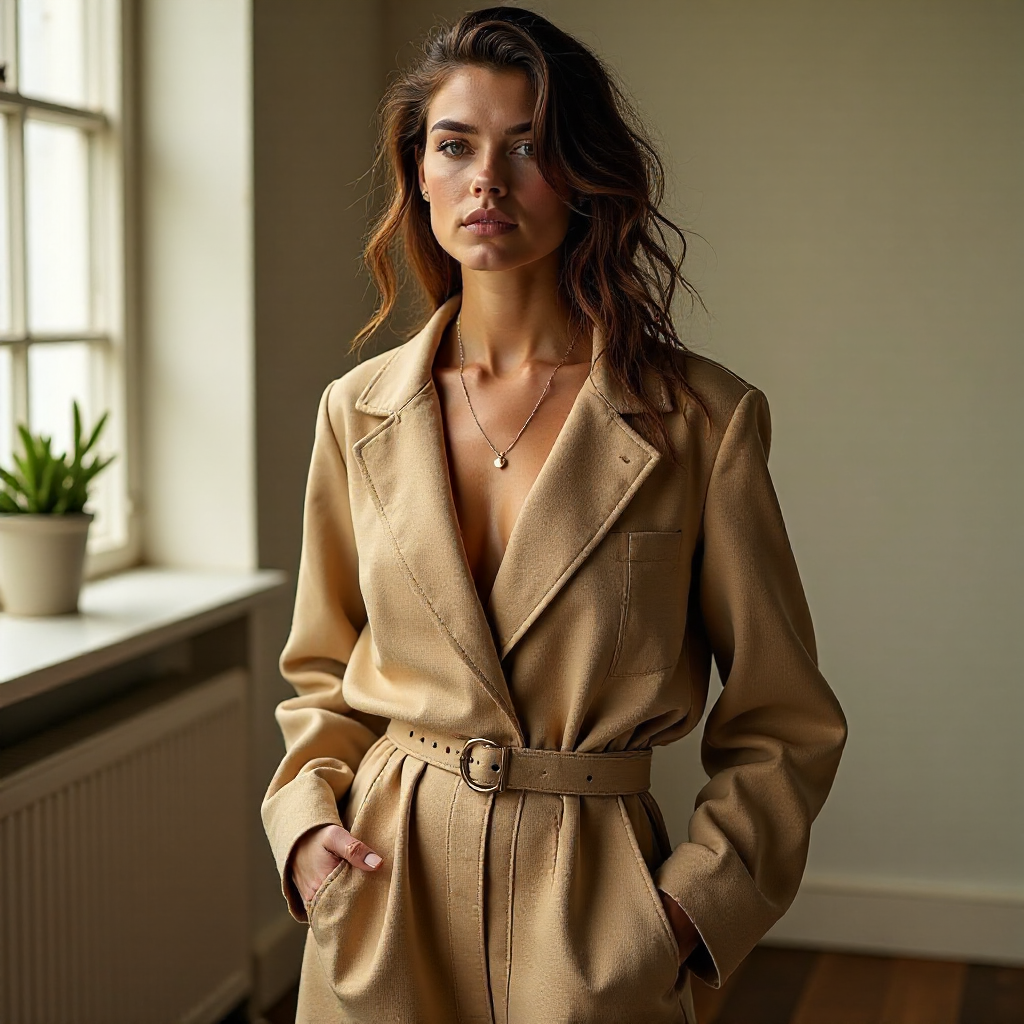
When sequencing a collection within your portfolio, think cinematically. Open with your strongest image, build through the middle, and close with something that lingers. The same narrative instinct that makes a film memorable applies to how a buyer or editor experiences your work.
Showcase the Process, Not Just the Final Product
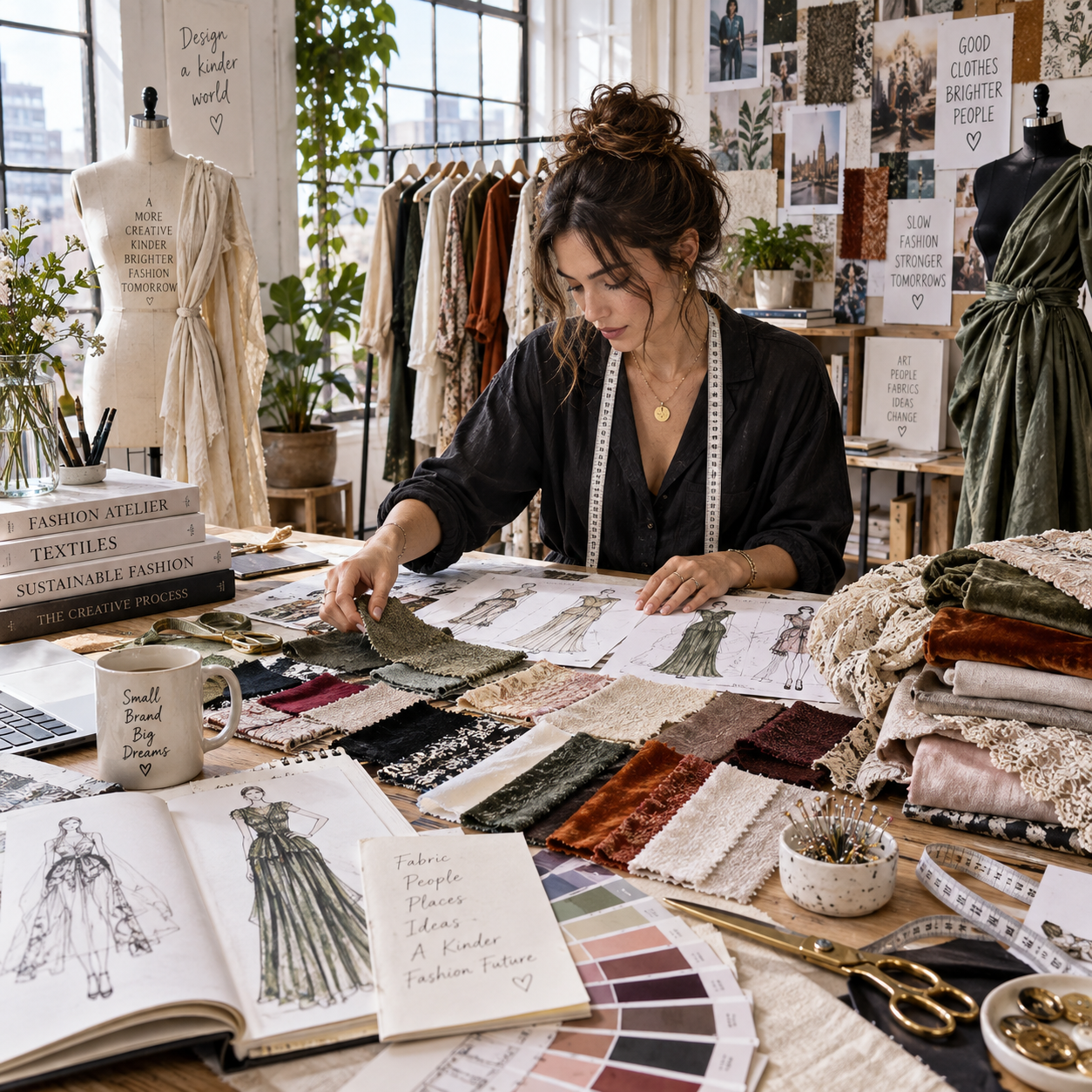
Including the work behind the work — mood boards, technical sketches, and garment construction details — adds a layer of credibility that finished photography alone cannot provide. It demonstrates that your aesthetic is intentional, not accidental.
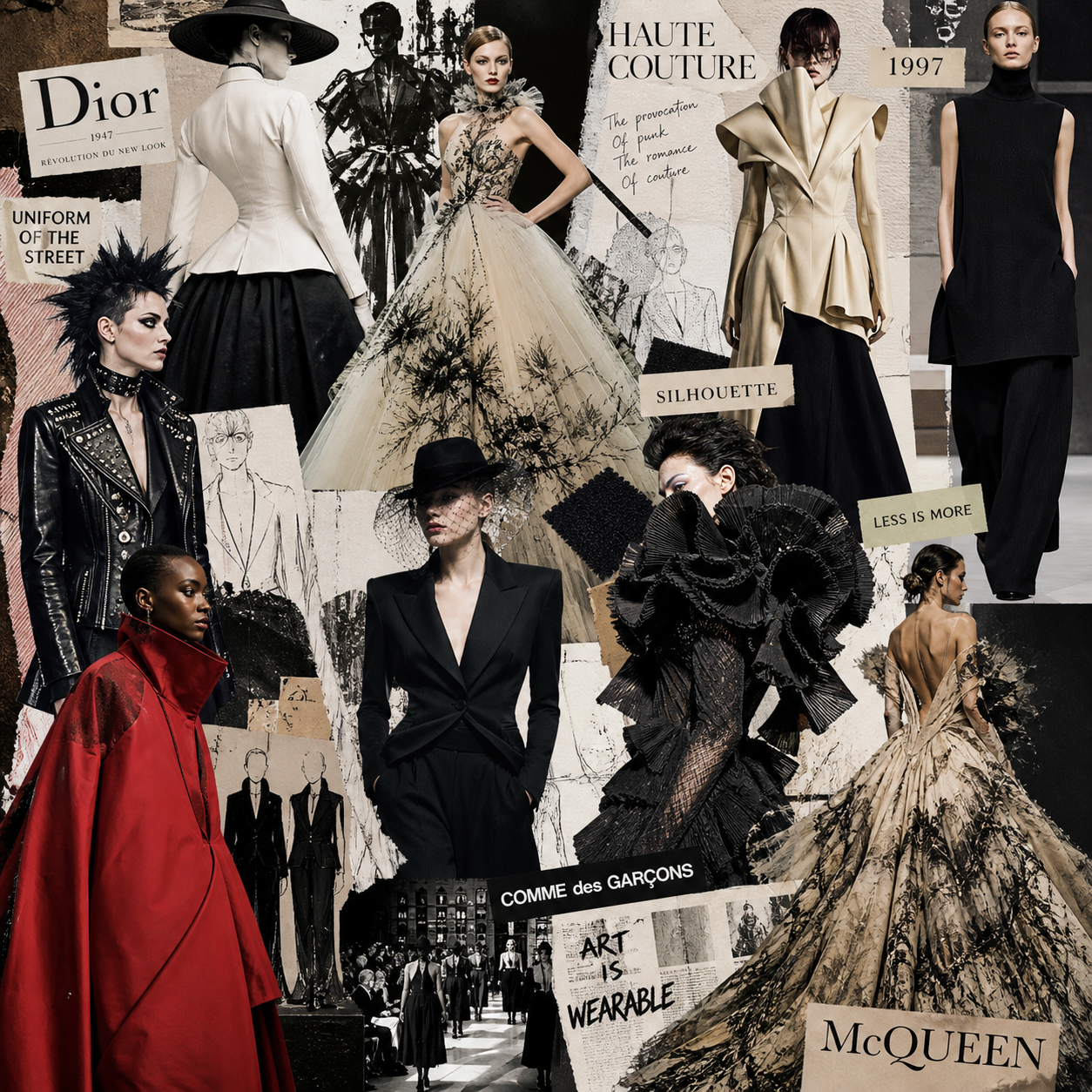
A mood board placed at the opening of a collection section tells the viewer where the concept originated. It shows your references, your visual vocabulary, and how you translate inspiration into design decisions. This is particularly valuable when presenting to collaborators or press who want to understand the thinking, not just the result.
Technical sketches and construction notes serve a different purpose: they signal professional competence to buyers and production partners. Showing a flat sketch alongside the finished garment demonstrates that you understand how the piece is made, not just how it looks. For labels seeking manufacturing partnerships or wholesale relationships, this kind of technical transparency builds trust quickly.
You do not need to include process documentation for every piece. One or two collections with full process visibility — concept through construction — is enough to establish depth. The rest can lead with the finished work.
Build a Portfolio Website That Reflects Your Label
A portfolio website for a fashion label should function as a curated space that extends your brand world, not just a hosting solution for images. The platform matters less than the execution, but the execution matters enormously.
Photography quality is non-negotiable. Low-resolution or poorly lit images undermine even the strongest garments. If budget is limited, prioritize professional photography for your hero collection and style the rest with care and consistency. Natural light, a clean background, and a coherent color palette across images go further than expensive equipment in inexperienced hands.
Visual hierarchy on the site should guide the viewer without effort. Your most powerful collection leads. Navigation is minimal and intuitive. The "About" or label story section is easy to find. Contact information is never more than one click away — buyers and press who have to hunt for an email address will not hunt for long.
The writing on your site — collection descriptions, your label story, any press quotes — should sound like the same person who made the clothes. Tone is part of brand identity. A label with a spare, architectural aesthetic should not have copy that reads like a lifestyle blog. Consistency between visual and written voice is something sophisticated buyers notice, even if they cannot articulate why.
Make Your Designer Identity Unmistakable
A fashion portfolio succeeds when the viewer could identify the designer's work without seeing a name attached. That level of visual distinctiveness is the goal — and it is built through consistency, not repetition.
Your personal brand as a designer is expressed through the sum of your choices: the silhouettes you return to, the materials you favor, the cultural references you draw from, the customer you are designing for. None of these need to be explained in a mission statement. They should be legible through the work itself.
Where copy helps is in giving your aesthetic a name — not a marketing tagline, but a clear articulation of your point of view. "Workwear reinterpreted through the lens of West African textile traditions" is more useful than "contemporary womenswear." Specificity is not limiting; it is clarifying. The designers and labels with the most loyal followings are rarely the most broadly appealing — they are the most precisely themselves.
Weave this identity consistently through every section of your portfolio: the collections you choose to feature, the photography direction, the way you write about your work, and even the fonts and layout of your website. A viewer who spends five minutes with your portfolio should leave with a clear sense of who you are as a designer.
Keep It Current and Keep It Moving
A portfolio is not a finished document — it is a living presentation that should evolve as your label evolves. Stale work is one of the most common and most damaging mistakes in fashion portfolio management.
Set a practical update schedule: review your portfolio at the end of each season or major collection, and ask whether the work shown still represents your current direction. If you have grown significantly as a designer in the past year, the portfolio should reflect that growth. Leaving outdated collections at the front of your presentation because they were once your best work is a form of creative dishonesty — to yourself and to the people you are trying to reach.
Adapt the format to the context. A PDF portfolio for email outreach to buyers should be compressed for fast loading, sequenced for a linear read, and include contact details on every spread. A print portfolio for in-person presentations can afford more texture — physical swatches, layered pages, tactile elements that a screen cannot replicate. Your website serves a different function again: it is always on, always accessible, and often the first impression you make.
Maintaining multiple versions of your portfolio is not redundant — it is professional. The discipline of adapting your presentation for different audiences is the same discipline that makes a strong collection: knowing your context, and designing for it.
Frequently Asked Questions
How many pieces or projects should a fashion designer portfolio include?
For most designers, six to ten projects or collections is the right range. Each project should be presented with enough depth — three to eight images minimum — to tell a coherent story. Fewer strong projects always outperform more mediocre ones.
Should I include student work or early collections in my portfolio?
Only if it is genuinely among your strongest work and still reflects your current aesthetic direction. If your label has evolved significantly, early work can create confusion about your identity. When in doubt, leave it out — or create a separate archive section that is clearly labeled as such.
Do I need professional editorial photography, or can I style my own shoots?
Professional photography is ideal, but not always essential. Self-styled shoots can be highly effective with strong natural light, a deliberate creative direction, and consistent visual treatment across images. The key is intentionality — photography that looks considered will always outperform photography that looks rushed, regardless of who shot it.
How is a fashion label portfolio different from a general creative portfolio?
A fashion label portfolio prioritizes visual storytelling, collection narrative, and brand identity over individual skill demonstrations. It speaks to buyers, press, and collaborators simultaneously — communicating both creative vision and commercial potential. The lookbook, capsule collection, and editorial formats are specific to fashion and should anchor the presentation.
What's the best platform to host a fashion designer portfolio website?
Platforms like Squarespace, Format, and Adobe Portfolio are widely used by fashion designers for their clean templates and image-forward layouts. The best platform is the one you will actually maintain and update. Prioritize ease of use and visual quality over advanced features you are unlikely to need.