
The Evolution of Minimalist Fashion: Key Designers and Defining Trends
Minimalist fashion is one of the few design philosophies that has never really left. It arrives, recedes, and returns — each time slightly reframed by the cultural moment around it. From the spare tailoring of 1960s New York to the quiet luxury aesthetic dominating runways and social media today, the movement's core instinct remains unchanged: remove what isn't necessary, and trust what remains.
What Is Minimalist Fashion? Defining the Aesthetic
Minimalist fashion is a design approach defined by restraint — clean lines, neutral color palettes, precise construction, and the deliberate absence of ornament. Where other movements add, minimalism edits. The result is clothing that communicates through proportion, fabric quality, and silhouette rather than pattern or decoration.
Philosophically, it draws from the same impulse as minimalist art: the idea that reduction is itself a form of expression. A perfectly cut coat in ivory wool doesn't need embellishment. The cut is the statement. This distinguishes minimalism from mere simplicity — it isn't about making things easy, but about making deliberate choices with every element that remains.
Visually, minimalist fashion tends toward monochromatic dressing, structured garments with clean seam lines, and a restrained material palette — linen, wool crepe, cotton poplin, and silk. Excess is treated as noise rather than richness.
The Origins of Minimalism in Fashion (1960s–1980s)
The minimalist impulse in fashion emerged in the 1960s, shaped by the same cultural forces that produced minimalist sculpture and architecture. As modernism pushed back against postwar ornamentation, fashion began to follow suit.
American sportswear played a foundational role. Designers working in New York during the 1960s and 1970s were already prioritizing functional design — garments that moved with the body, used quality fabric efficiently, and rejected the theatrical excess of Parisian haute couture. This wasn't anti-fashion; it was a different kind of sophistication.
By the 1980s, Japanese designers arriving in Paris — most notably Yohji Yamamoto and Rei Kawakubo of Comme des Garçons — introduced a more conceptual strain of minimalism. Their work engaged with deconstructivism, deliberately exposing construction, asymmetry, and negative space. This was minimalism in dialogue with structure itself, not just its surface.
The Designers Who Shaped the Movement
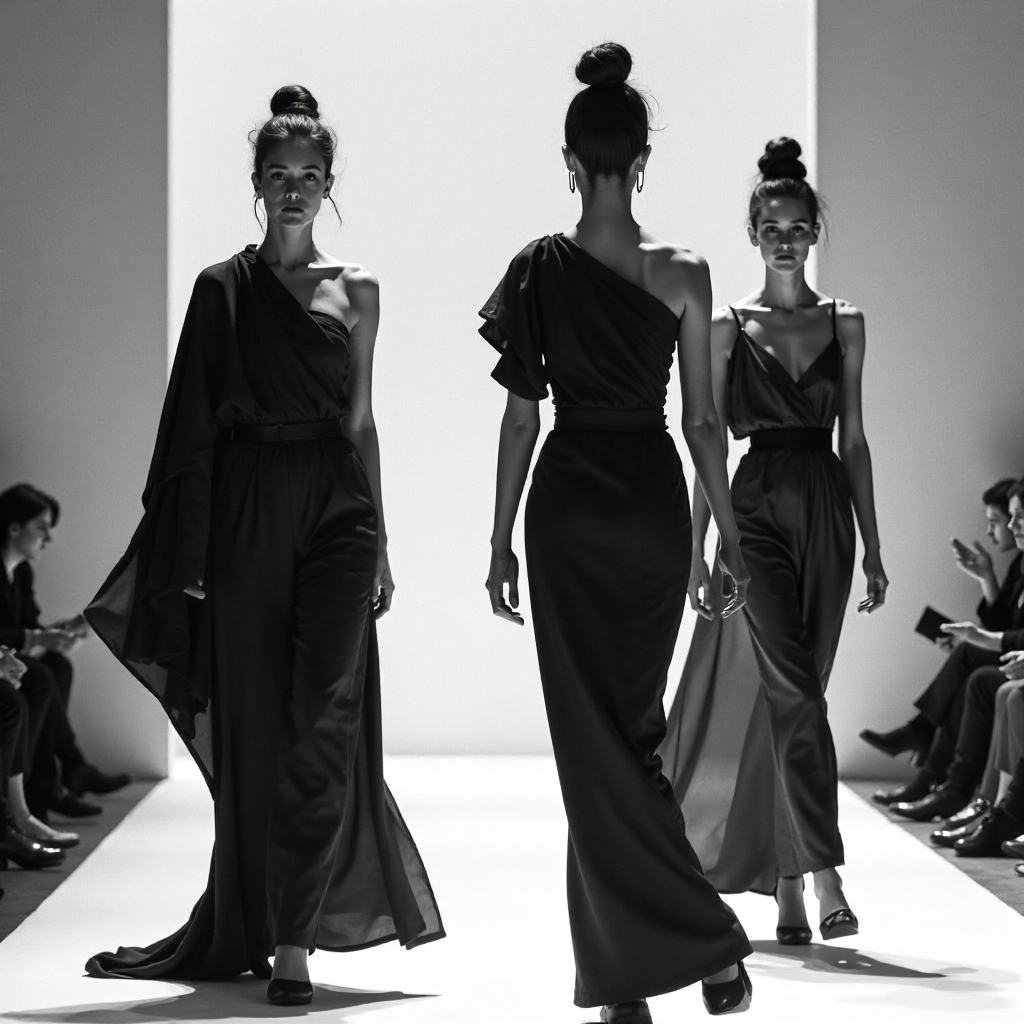
A handful of designers are inseparable from the history of minimalist fashion — each bringing a distinct interpretation to shared principles.
Halston defined American minimalism in the 1970s with fluid jersey dresses and a refusal to over-engineer. His clothes were architectural in concept but sensual in wear — a combination that proved influential for decades.
Calvin Klein took that American restraint and made it global. Through the 1980s and 1990s, Klein built an entire design language around neutral palettes, precise tailoring, and functional silhouettes. His collections made minimalism aspirational without making it inaccessible.
Jil Sander brought a European intellectual rigour to the movement. Her work during the 1990s — immaculate coats, structured trousers, and an almost clinical precision in fabric choice — established the template for what luxury minimalism could look like when craftsmanship was the point.
Helmut Lang operated at the intersection of minimalism and conceptual fashion. His use of industrial materials alongside traditional tailoring gave his work an edge that felt genuinely new. Lang understood that minimalism didn't have to be soft or quiet — it could be sharp and confrontational.
More recently, The Row (founded by Mary-Kate and Ashley Olsen) has become the defining contemporary expression of the tradition: extreme material quality, understated silhouettes, and a refusal to participate in trend cycles.
Core Design Principles That Define Minimalist Collections
Minimalist fashion rests on a consistent set of design principles that appear across decades and designers, regardless of cultural context.
- Neutral color palette: Ivory, black, camel, grey, and navy dominate. Color is used sparingly and intentionally — a single warm tone against white, rather than contrast for its own sake.
- Clean lines and precise silhouette: Every seam serves a purpose. Silhouettes are either architecturally structured or deliberately fluid — never muddled.
- Quality fabrication: Fabric choice is where minimalist design invests most heavily. A garment with no decoration has nowhere to hide poor material.
- Restrained detailing: Buttons, closures, and finishing are functional and considered. Decoration, when it appears, is structural — a tuck, a dart, a seam placement.
- Proportion as expression: An oversized blazer or a cropped trouser communicates through scale rather than surface. Proportion is the primary design tool.
These principles aren't rules so much as instincts. The best minimalist designers know when to break one — and that knowledge comes from understanding why each principle exists in the first place.
How Minimalism Evolved Through the 1990s and 2000s
The 1990s were the decade when minimalist fashion moved from niche to mainstream. Grunge and anti-fashion created cultural space for clothing that rejected excess, and designers like Klein, Sander, and Lang filled that space with collections that felt genuinely contemporary.
This period also saw minimalism become commercialized in ways that diluted its rigor. "Minimalist" began appearing as a marketing term for anything beige and unembellished, regardless of construction quality or design intent. The aesthetic was easy to imitate on the surface — which meant the real thing required closer attention to distinguish.
The 2000s brought a complicated relationship with minimalism. The rise of fast fashion and maximalist logomania pushed the aesthetic into the background for much of the decade. But designers working in the quiet register — Phoebe Philo at Chloé and later Céline, Raf Simons at Jil Sander — kept the tradition alive and intellectually rigorous. Philo's Céline in particular redefined what intentional dressing could mean for a contemporary audience: clothing that respected the wearer's intelligence and lifestyle.
Quiet Luxury and Modern Minimalism — Where the Trend Stands Today
Quiet luxury is the current cultural expression of minimalist fashion — and it connects directly to the movement's historical roots. The term describes clothing that signals wealth and taste through quality and restraint rather than visible branding or ornamentation. It's minimalism with an economic subtext.
The aesthetic has found a broad audience partly through television (the costuming of Succession became a reference point for the look) and partly through a genuine cultural shift toward slow fashion and considered consumption. Buying fewer, better things has become a value proposition, not just a style preference.
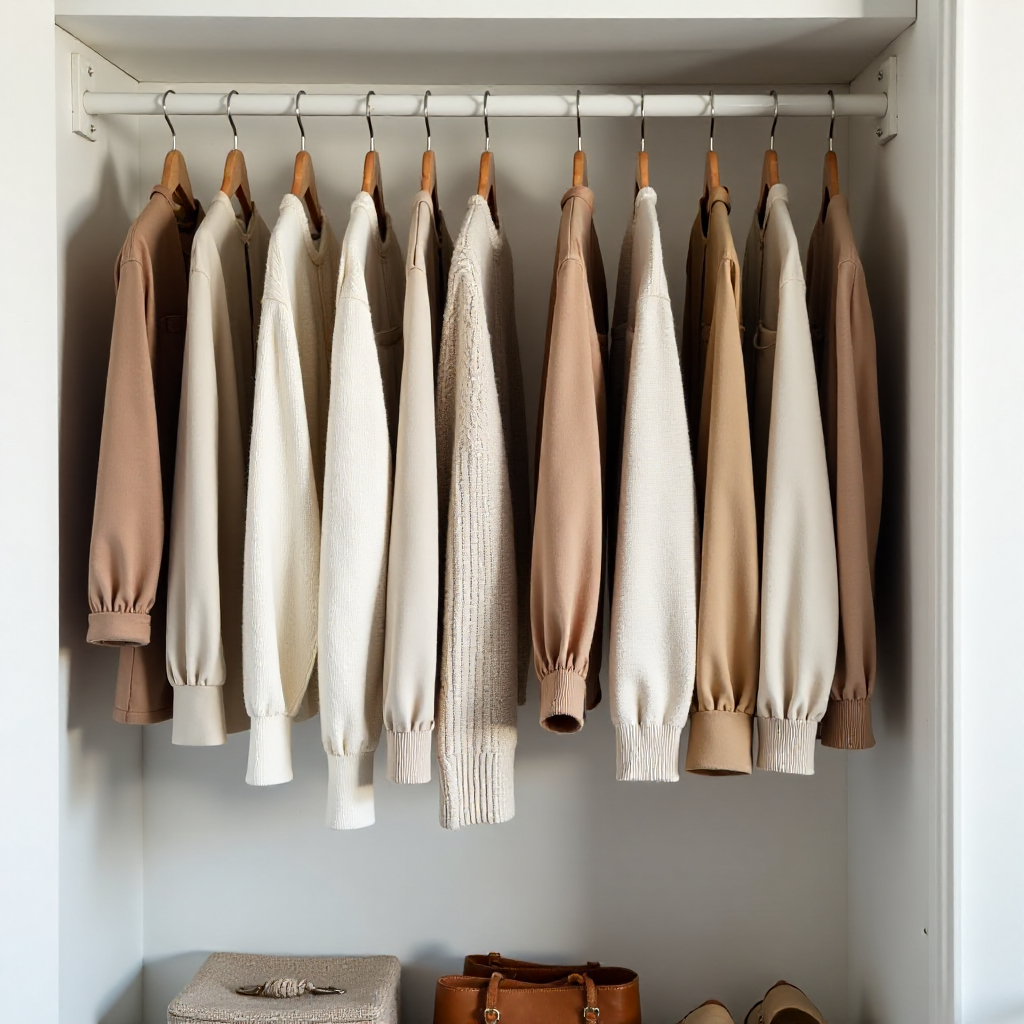
The capsule wardrobe concept — a curated collection of versatile, high-quality pieces that work together — has become the practical framework through which many people engage with minimalist fashion. It's an approach that connects personal style directly to the design principles that minimalist fashion has always championed: quality over quantity, longevity over novelty.
Brands like Totême, Lemaire, and Auralee are carrying the tradition forward with collections that feel contemporary without chasing trend cycles. The movement has also found expression in the growing interest in slow fashion — a broader philosophy of intentional production and consumption that aligns naturally with minimalism's core values.
How to Build a Minimalist Wardrobe Inspired by These Designers
Building a minimalist wardrobe is less about buying specific pieces and more about developing a consistent design sensibility. The goal is a collection where everything works together and nothing feels like a compromise.
Start with your neutral foundation. Choose two or three base tones that work for your coloring — not necessarily black and white, but tones that sit naturally together. Build from there rather than adding contrast for variety.
Invest where it shows. Minimalist clothing has no decoration to distract from fabric quality or construction. A well-cut wool trouser in a mid-range price point will outperform a poorly constructed one at any price. Prioritize fabric hand and seam finish over brand name.
Edit ruthlessly. The capsule wardrobe only works if you actually remove pieces that don't serve the whole. Keeping items "just in case" is the opposite of the minimalist instinct. Each piece should earn its place.
Pay attention to proportion. The designers who do this best — Philo, The Row, Lemaire — understand that proportion is where minimalist fashion expresses personality. A slightly oversized shirt, a trouser with a specific break at the ankle: these are the choices that make a minimalist wardrobe feel considered rather than generic.
Finally, slow down. Minimalist fashion and impulsive purchasing are genuinely incompatible. The philosophy behind the aesthetic — restraint, intentionality, quality — applies to how you shop as much as what you wear.
Frequently Asked Questions
What are the defining characteristics of minimalist fashion?
Minimalist fashion is characterized by clean lines, neutral or monochromatic color palettes, precise tailoring, quality fabrication, and the deliberate absence of ornamentation. Proportion and silhouette carry the design rather than decoration or pattern.
How does minimalist fashion differ from quiet luxury?
Minimalist fashion is a broad design philosophy rooted in aesthetic restraint. Quiet luxury is a specific cultural expression of that philosophy — one that emphasizes high material quality and the absence of visible branding as signals of wealth and taste. All quiet luxury is minimalist in approach, but minimalist fashion encompasses a wider range of intentions and price points.
Which fabrics are most commonly used in minimalist design?
Wool crepe, silk, cotton poplin, linen, and cashmere appear most frequently in minimalist collections. The shared quality is that these fabrics drape or structure well and improve with wear — they reward the investment that minimalist dressing encourages.
Can minimalist fashion be expressive, or is it purely functional?
Minimalism is deeply expressive — it simply expresses through different means. Proportion, fabric weight, silhouette, and tonal contrast are all tools of expression within the aesthetic. Designers like Helmut Lang proved that minimalism can carry conceptual and even emotional weight without adding a single decorative element.
How do I start building a minimalist wardrobe on a budget?
Start by editing what you already own rather than buying new pieces. Identify the items you reach for consistently and notice what they have in common — that's your natural aesthetic foundation. When you do buy, prioritize fabric quality and construction over trend relevance. Secondhand and vintage shopping can yield excellent minimalist pieces at accessible prices, particularly for tailored garments from the 1990s and early 2000s.